
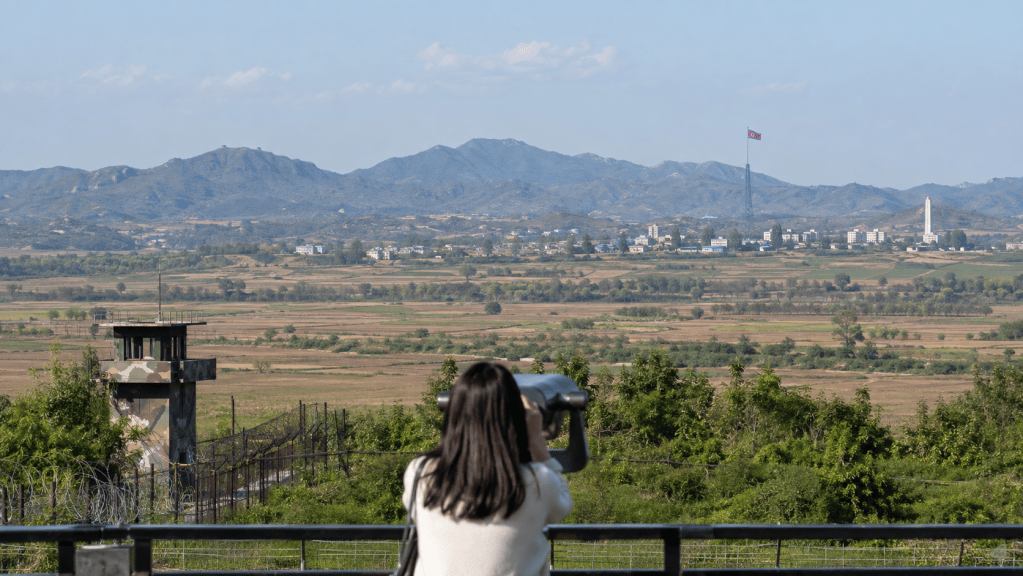
Dora Observatory is a Paju DMZ viewpoint looking toward North Korea. In clear conditions, you may see Kijong-dong village, Songak Mountain and the outskirts of Gaeseong. Access is through the controlled DMZ Peace Tour route from Imjingak, with an original passport required for foreign visitors. Fog and haze can obscure the view even when the observatory is open.
Current status: Dora Observatory is currently operating as part of standard Paju DMZ tourism. Access remains subject to military control and daily DMZ entry procedures.
Dora Observatory: Quick Facts
- What you may see: the DMZ, South Korea’s Daeseong-dong village, and parts of North Korea, including the Gaeseong area, when visibility allows.
- Location: Paju, on the controlled DMZ Peace Tour route.
- How to visit: join the official DMZ Peace Tour process from Imjingak; the observatory is not open for ordinary independent walk-in access.
- Bring: original identification, such as a passport or eligible resident ID.
- Important: an open observatory does not guarantee a clear view of North Korea. Weather, haze and access restrictions can change your experience.
Visitor and location information: Korea Tourism Organization (VisitKorea). Check DMZ Status Today before traveling.
What Is Dora Observatory?
Dora Observatory is a viewpoint in the Paju border area where visitors can look across the DMZ toward North Korean territory. Korea Tourism Organization describes it as the closest DMZ observatory to Panmunjom and notes that views can include Daeseong-dong, North Korean farmland, mountains and the city of Gaeseong.
Can You Really See North Korea?
Yes, when visibility is good. The view includes places on both sides of the DMZ. Use this distinction when listening to the guide or looking through the binoculars.
| Landmark | Which side? | What to look for |
|---|---|---|
| Kijong-dong | North Korea | The village identified in Paju City’s observatory guide. |
| Songak Mountain and Gaeseong outskirts | North Korea | The mountain and city landscape in the distance, when conditions allow. |
| Daeseong-dong | South Korea | The South Korean village within the DMZ; it should not be confused with a North Korean village. |
Landmarks are described by Paju City and Korea Tourism Organization. Seeing every landmark is not guaranteed; visibility and the viewing area available on the day matter.
The important point is that OPEN and GOOD VISIBILITY are not the same thing. The observatory may be operating normally while fog, haze, rain or poor air quality makes the view limited.
What Affects Visibility?
- Fog and low clouds
- Haze and air quality
- Rain or snow
- Seasonal humidity
- Time of day and changing light conditions
A clear winter or autumn day can offer a very different experience from a humid summer morning. No tour operator can guarantee a perfect view of North Korea.
Field perspective: Read a DMZ guide’s account of heavy fog at Dora Observatory and how visibility differed at Odusan Unification Observatory later that day. This is one firsthand experience, not a prediction of visibility or a guarantee that an alternative visit will be possible.
Can You Visit Dora Observatory Independently?
Not as a normal walk-in attraction. VisitKorea states that individual visits are not allowed and that access is through the DMZ Peace Tour departing from Imjingak after reservation and controlled entry procedures. Foreign visitors should carry their original passport.
How Does Entry Work?
The observatory is part of the same controlled route as the 3rd Infiltration Tunnel. In normal field operation, DMZ ticketing begins around 9:00 AM at Imjingak on a first-come, first-served basis. The group then enters at the time assigned for that day.
Because ticket allocation, military procedures and visitor volume can change the schedule, the time printed on a tour listing should not be treated as a guaranteed exact time for arriving at Dora Observatory.
Photography at Dora Observatory
Paju City’s current DMZ Peace Tour guidance states that photography and video recording, including drones, are prohibited within the controlled DMZ Peace Tour course. Follow current signs and instructions from military personnel and guides on the day of your visit. Rules at Imjingak and other areas outside the controlled route can be different.
Official Hours and Monday Closure
VisitKorea currently lists Dora Observatory operating hours as 10:00 AM to 5:00 PM and lists Monday as the regular holiday. In practice, your access is still tied to the official DMZ tour system, not simply the observatory’s opening hours.
Official VisitKorea information for Dora Observatory
Is Dora Observatory the same as Dorasan Station?
No. Dora Observatory and Dorasan Station are separate places. Visiting Dora Observatory does not automatically mean your itinerary includes Dorasan Station.
Paju’s current operating material separates the regular Imjingak DMZ route from a Korail-linked route that can include Dorasan Station. If Dorasan Station matters to you, check the exact itinerary before booking rather than assuming it is included with Dora Observatory.
Dora Observatory vs. Odusan Observatory
Dora Observatory is part of the controlled Paju DMZ route and is normally visited together with the 3rd Tunnel. Odusan Unification Observatory is a separate border viewpoint outside the standard controlled DMZ route. That makes Odusan useful on days when the core Paju DMZ is restricted, but the experience and viewpoint are different.
Which Featured Tours Include Dora Observatory?
When the standard Paju DMZ route is operating, Dora Observatory is included in the featured half-day, Gamaksan, Majang Lake, retired military officer and private DMZ itineraries.
If Dora Observatory is a must-see, compare the Half-Day DMZ Tour from Seoul or a Private DMZ Tour from Seoul with a dedicated guide.
Included: All DMZ tour options featured on this site also include the North Korea Experience Center and a live Q&A with a North Korean defector.
Dora Observatory FAQ
Is North Korea visible every day?
No. The observatory can be open while visibility is poor. Weather and haze make a major difference.
Do I need a passport?
Foreign visitors should carry their original passport because the route passes through military-controlled access points.
Is Dora Observatory the JSA?
No. Dora Observatory is part of the standard Paju DMZ tourism route. JSA and Panmunjom use a separate access system.
Is Dora Observatory expected to close from November 23 to 30, 2026?
Plan for a temporary Dora Observatory access restriction on November 23–30, 2026. A road-closure notice was posted by the Korea Tourist Guide Association on October 27, and travel updates citing Paju DMZ Peace Tour notices report that Dora Observatory visits are expected to be suspended during roadworks. The dates may change or be extended. This does not mean every attraction on the Paju DMZ route is closed: the 3rd Infiltration Tunnel may still be visited subject to its own ticket and military access rules. Ticketing during the roadworks: Paju City’s October 23 official notice specifies on-site ticket issuance only for the remaining DMZ Peace Tour operation during November 23–30. If you already booked, check the arrangements with your operator.
If your booked tour normally includes Dora: ask your operator which observatory, if any, will be substituted. Our operations team has advised some travelers that Odusan Unification Observatory is the planned alternative for their particular departures, but Odusan is a different location and is not guaranteed for every tour. Confirm the exact itinerary for your date before traveling. Check the October 27 tourist-guide association notice and Paju City’s DMZ Peace Tour announcements for updates.
Related guides: 3rd Infiltration Tunnel Guide | JSA / Panmunjom Updates | DMZ Status Today | Check your DMZ travel date | DMZ from Seoul Complete Guide
Questions? Ask us on WhatsApp or email us.