

As you drive up to Dora Observatory, you can see a tall cross-shaped tower standing beside the road. While it symbolizes the presence of a church, it is also said to have served a psychological warfare purpose. In this sparsely populated frontline area, the cross was intended to catch the attention of North Korean soldiers and civilians, encouraging them to seek religious freedom and consider defecting to South Korea.
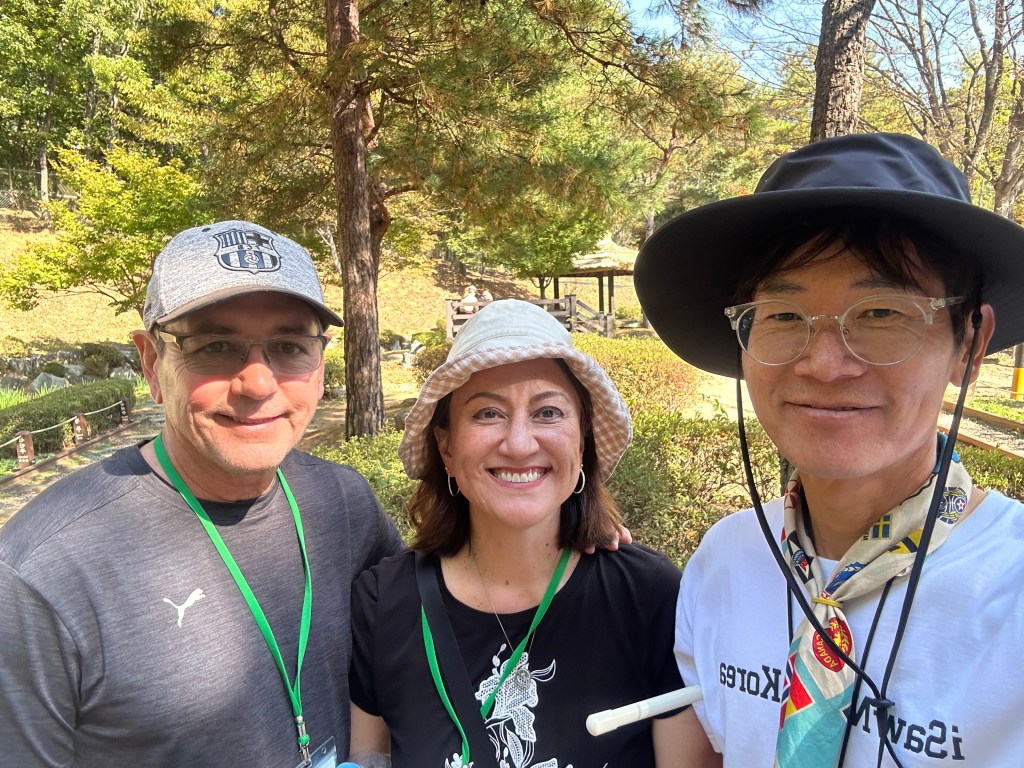
When I explained this hidden meaning behind the cross, a couple on my tour said, “I work in ministry in the United States, and my wife is the daughter of a U.S. service member who served in Korea.”
That was how our conversation began, and it continued with great sincerity and interest.
Sonja told me that her father had served in an intelligence unit at a U.S. military base near the Korean front lines from 1968 to 1970. During that time, he frequently went on missions in the DMZ area. She also shared that he had met and married a Korean woman while stationed in Korea. He continued his military service for nearly another decade before eventually retiring.
Sadly, her father later developed cancer, which the family attributed to exposure to Agent Orange during his military service in Korea, and eventually passed away. Many members of Sonja’s extended family, including her grandmother, uncles, and aunts, had also immigrated to the United States. Today, Sonja lives happily with her mother.
This visit to Korea was especially meaningful to Sonja. She was visiting her mother’s homeland and the country where her father had served as a young soldier. She told me that it was a wonderful opportunity to follow in her parents’ footsteps, reconnect with her family’s past, and gain a deeper understanding of her own roots and identity.
As a retired military officer myself, I felt deeply grateful for her late father’s service and sacrifice. I also felt a special connection with Sonja, who had traveled all the way to Korea to discover her family’s roots.
This encounter reminded me that today’s Republic of Korea was built not only through the sacrifices we know about, but also through the sacrifices of countless people whose stories may never be told. It was also a reminder that, even today, people around the world continue to care deeply about Korea and feel a special connection to this country.
It was more than just a DMZ tour. It was a meaningful moment that connected history, family, sacrifice, and identity—and one that I will remember for a long time.
Planning to see the observatory? Find visitor information and visibility tips in our Dora Observatory guide.


Leave a Reply